




Nomad travel insurance is the one bill I never skip. Over the years I’ve used it for a broken wrist in Asia and a hospital stay in Latin America.
So this guide is about what actually pays out, not what looks cheapest.
Also, the market has changed. Providers renamed or repriced several popular plans in 2026, and the cheap ones often fail visa checks.
Meanwhile, most guides ignore the thing developers care about most: the laptop.
So we compared seven plans on price, medical limits, home country cover and gear. Then we checked which ones work for a digital nomad visa.
Overall, we checked every price and limit on 24 November 2026. Still, prices change often, so confirm your quote before you buy.
Quick Answer
Best budget pick: SafetyWing Essential, from $62.72 every four weeks for ages 10 to 39, with no deductible.
Best for long-term nomads: Genki Native, from €180 a month, with €1 million of cover a year.
Best for adventure trips: World Nomads, which you can buy even after you leave home.
Best for visa applications: A local or international health plan that meets the consulate’s rules. However, most travel plans don’t.
Don’t forget: Your laptop. Most nomad plans cap baggage low, so add gadget cover.
Travel insurance vs health insurance: what nomads actually need
This is the mistake I see most often. Specifically, people buy travel insurance and assume it works like health insurance.
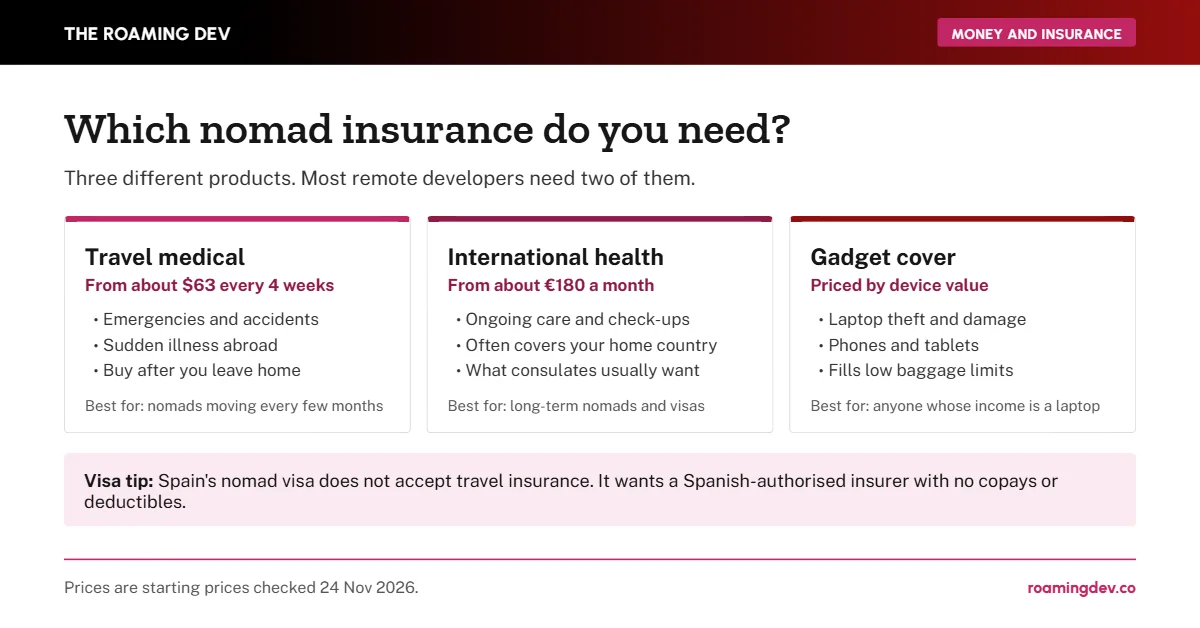
In fact, there are three different products, and most developers need two of them.
| Type | What it covers | Best for | Typical price |
|---|---|---|---|
| Travel medical insurance | Emergencies, accidents and sudden illness abroad | Most nomads moving every few months | From about $63 every 4 weeks |
| International health insurance | Ongoing care, check-ups and often your home country | Long-term nomads and visa applicants | From about €180 a month |
| Gadget insurance | Theft, loss and damage to laptops and phones | Anyone whose income depends on a laptop | Varies by device value |
Generally, travel medical plans are cheap because they cover emergencies only. However, they won’t pay for routine care, and many visas reject them.
By contrast, international health insurance covers ongoing care. Still, it costs more, but it’s what consulates usually want.
Nomad travel insurance compared (2026)
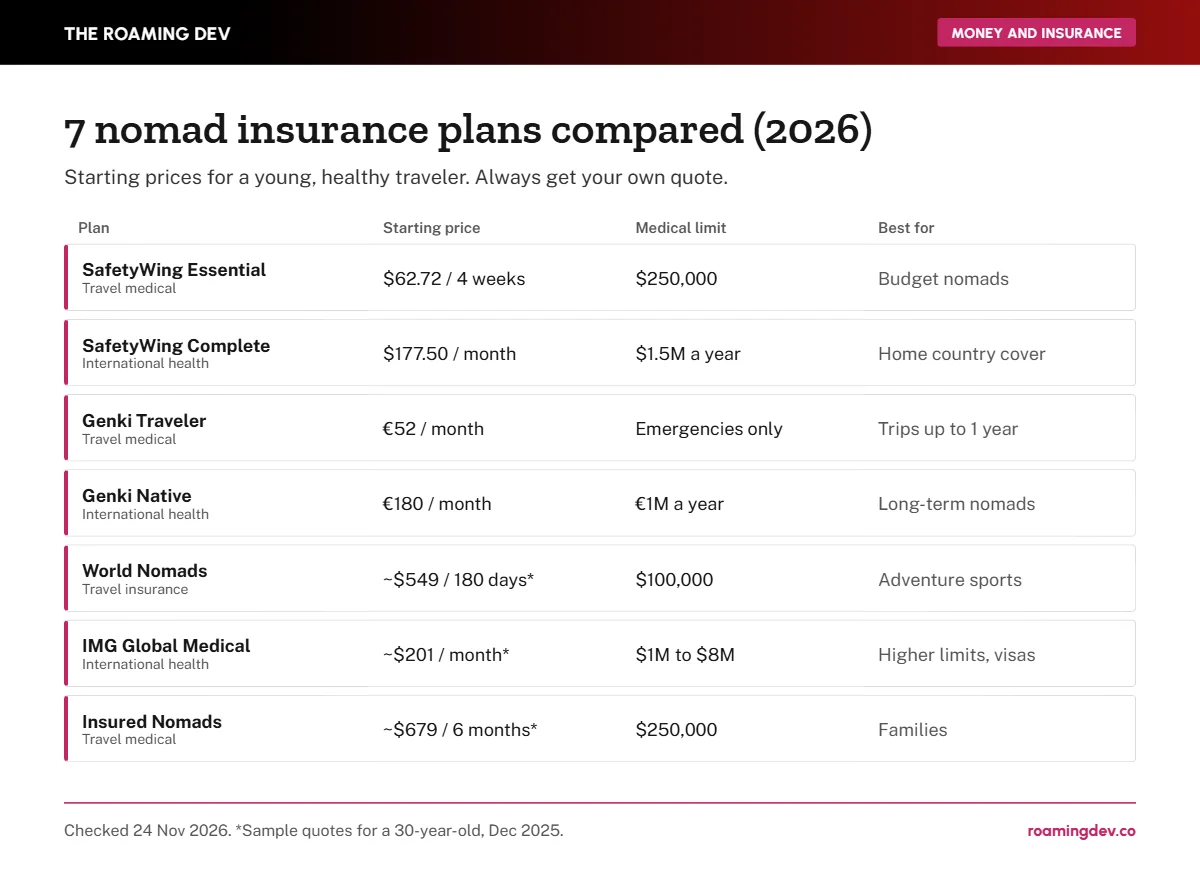
Here’s how the seven plans stack up. Also, prices are starting prices for a young, healthy traveler.
| Plan | Type | Starting price | Medical limit | Best for |
|---|---|---|---|---|
| SafetyWing Essential | Travel medical | $62.72 every 4 weeks (ages 10 to 39) | $250,000 | Budget nomads |
| SafetyWing Complete | International health | From $177.50 a month (ages 18 to 39) | $1.5 million a year | Nomads who want home cover |
| Genki Traveler | Travel medical | From €52 a month | Emergencies only | Trips of 1 month to 1 year |
| Genki Native | International health | From €180 a month | €1 million a year | Long-term nomads |
| World Nomads | Travel insurance | About $549 for 180 days (sample quote) | $100,000 | Adventure sports and short trips |
| IMG Global Medical | International health | From $201 a month (Bronze, sample quote) | $1 million to $8 million | Higher limits and visas |
| Insured Nomads World Explorer | Travel medical | About $679 for 6 months (sample quote) | $250,000 | Families and higher limits |
The best nomad insurance plans, reviewed
1. SafetyWing Essential: best budget travel medical plan
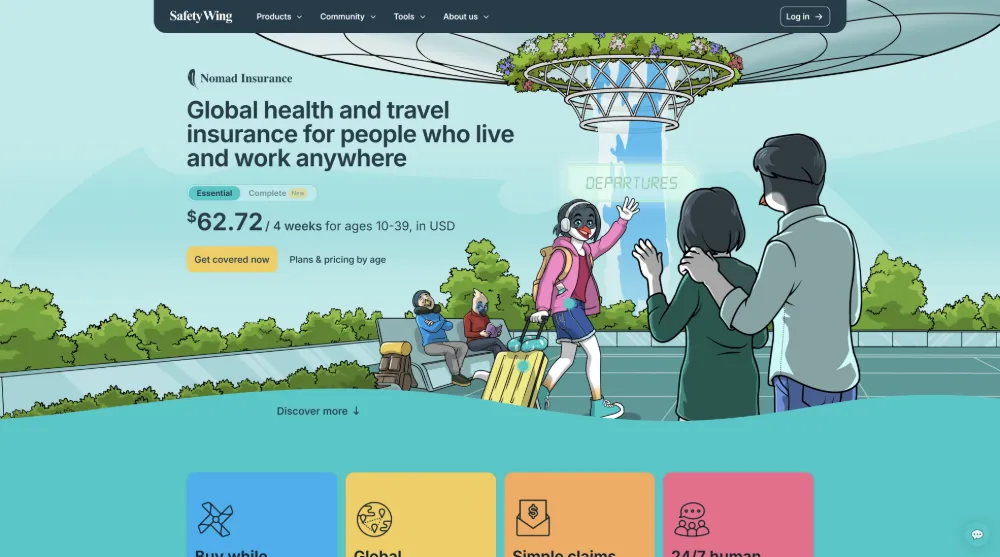
SafetyWing is the plan I see most often in coworking spaces, and for good reason. It’s cheap, it runs like a subscription, and you can buy it after you leave home.
Currently, Essential costs $62.72 every four weeks for ages 10 to 39. Then the price rises with each age band, so check the calculator for your age.
Also, the updated Essential plan has no deductible. Moreover, it covers up to $250,000 in medical costs and $100,000 for medical evacuation.
There are limits, though. Specifically, Essential covers emergencies, not routine care.
Also, it covers your home country for only 30 days in every 90, or 15 days for US residents.
Finally, SafetyWing doesn’t cover anyone aged 70 or over. Besides, if you know your dates, the 364-day plan costs 10% less than paying every four weeks.
Read our full SafetyWing review for claims and exclusions.
2. SafetyWing Complete: best for home country cover
Complete is SafetyWing’s full health plan. It starts at $177.50 a month for ages 18 to 39.
In return, you get up to $1.5 million of cover a year. Moreover, it includes routine doctor visits, preventive care and mental health.
Better still, Complete treats your home country like anywhere else. So it suits nomads who go home for long stretches.
3. Genki Traveler: best for trips under a year
Genki is a provider built specifically for nomads. However, Genki Traveler has now replaced its old Explorer plan.
Traveler starts at €52 a month, with a one-month minimum. Generally, it suits trips of one month to one year, for ages up to 69.
However, it covers emergencies and medically necessary treatment only. Also, it covers your home country for emergencies in the first six weeks of each stay.
4. Genki Native: best for long-term nomads
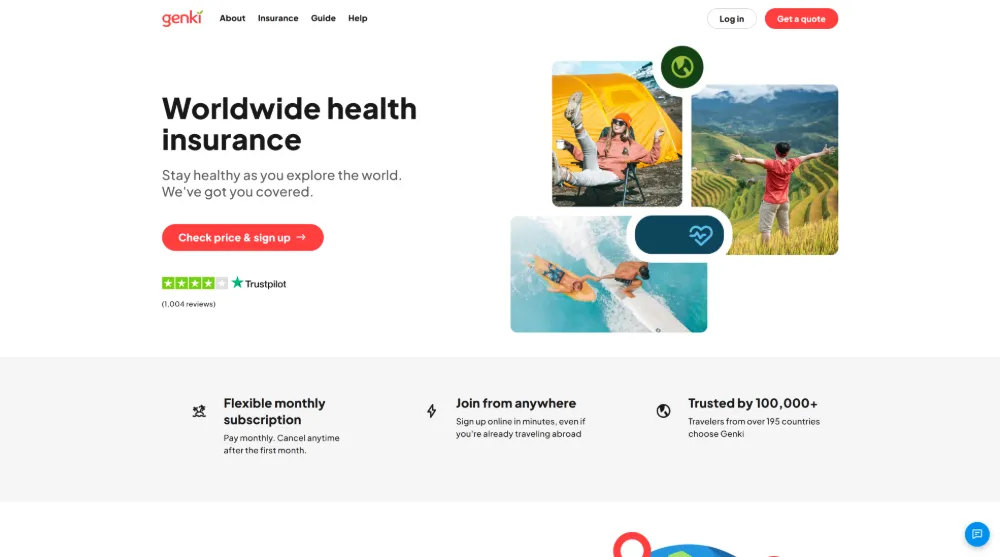
Native is real international health insurance. It starts at €180 a month, with a one-year minimum.
Specifically, it covers up to €1 million a year for treatment at any licensed doctor or hospital. Also, you can join up to age 55, and there’s no upper age limit once you’re covered.
If you want preventive care, dental and mental health, Native Premium starts at €260 a month.
Honestly, if you’ve been on the road for more than a year, this is the tier I’d look at first.
5. World Nomads: best for adventure trips
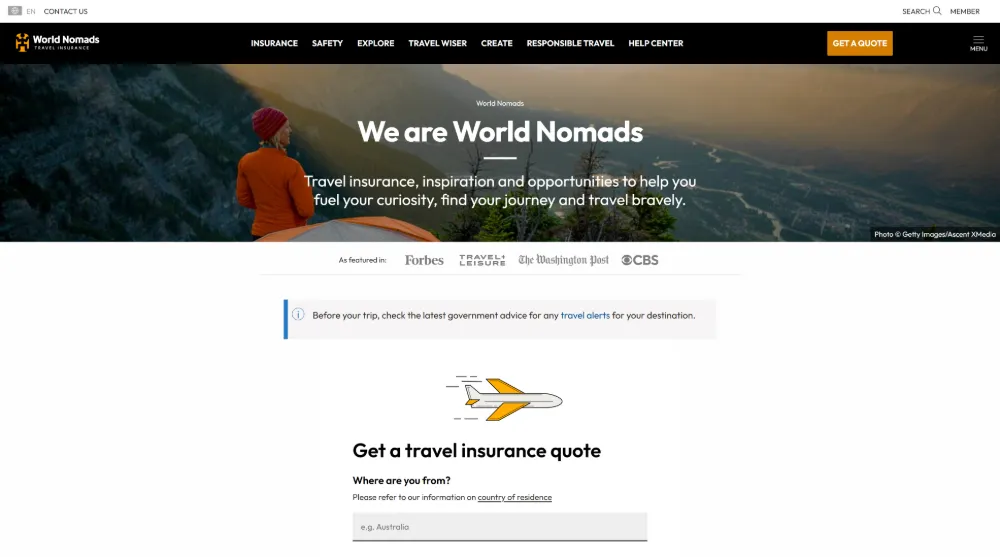
World Nomads is famous for covering adventure activities. So it suits nomads who dive, trek or ski between work sprints.
Also, you can buy a policy from anywhere, even mid-trip. However, if you buy while traveling, full cover can take up to 72 hours to start.
On price, a sample 180-day quote was about $549 for the Standard plan and $788 for Explorer. Still, both include only $100,000 of emergency medical cover.
Read our World Nomads review.
6. IMG Global Medical: best for higher limits
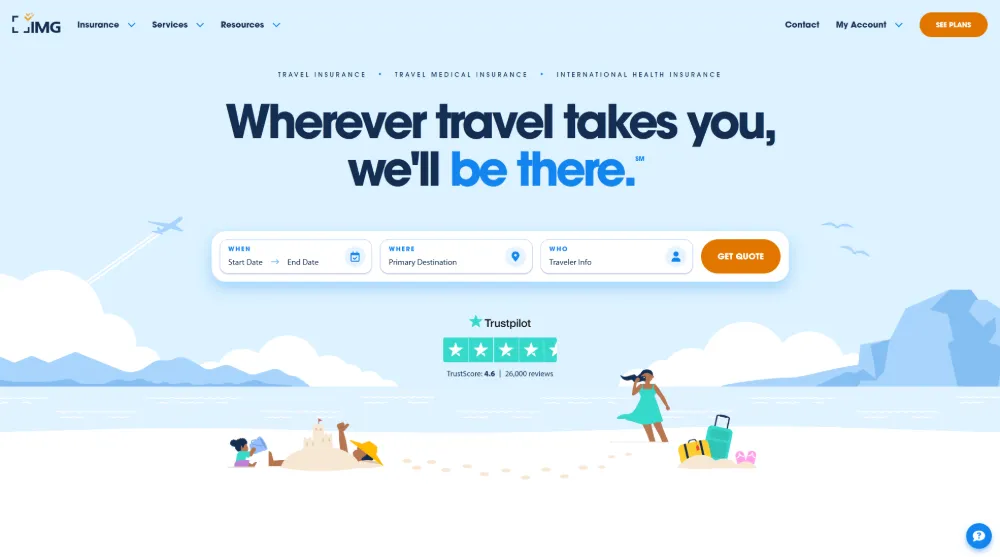
IMG suits nomads who want big limits and a plan that looks like real health insurance. Specifically, its Global Medical plans range from Bronze to Platinum.
For example, sample quotes for Spain ran from $201 a month for Bronze to $834 for Platinum. In return, limits run from $1 million to $8 million.
So IMG costs more, but it’s closer to what a consulate wants to see.
7. Insured Nomads World Explorer: best for families
Insured Nomads targets families and long-stay travelers. A sample six-month quote was about $679, with $250,000 of medical cover and a $100 deductible.
Also, you can raise the limit to $1 million for a higher premium.
Which nomad insurance works for a digital nomad visa?
This is where most nomad insurance falls down. Indeed, many consulates reject basic travel policies.
For example, Spain’s digital nomad visa wants a policy from an insurer authorised in Spain. It must have no copayments, no deductibles and no waiting periods.
Moreover, Spain doesn’t accept travel insurance at all.
Similarly, Panama wants cover in Panama for your whole stay. If the policy comes from abroad, it needs an apostille.
So here’s my rule. Use a travel medical plan for travel, but buy local or international health insurance for the visa. Then check the consulate’s wording line by line before you pay.
Our digital nomad visa guide lists the insurance rules country by country. Also, our guide on how to move to Europe covers the visa paperwork.
Don’t forget your laptop
For developers, the laptop is the business. However, most travel plans treat it as baggage.
Typically, baggage limits are low, and electronics often have a per-item cap. For example, one plan in our research capped baggage loss at $1,000 in total.
So check the per-item limit before you buy. Alternatively, add a gadget rider or a separate gadget policy.
Heymondo, for instance, sells an electronics add-on.
I learned this the hard way when a laptop was stolen from a café. Unfortunately, my travel policy paid a fraction of its value. Now I insure my laptop separately, and I keep a cloud backup.
Our remote developer gear guide covers the kit worth protecting. Also, our guide to connectivity and security covers backups and theft protection.
How to choose nomad insurance
Start with how you travel, not with the price. Then work through these five questions.
- How long are you away? Under a year, a travel medical plan often works. Over a year, look at international health insurance.
- Do you need a visa? If so, buy the cover the consulate asks for first.
- Will you go home? If you spend months at home, choose a plan with home country cover.
- How old are you? Prices rise with age, and some plans stop at 70.
- What’s your laptop worth? If it’s more than a month’s rent, insure it separately.
Tips from years of nomad insurance claims
First, keep every receipt and medical report, in English if possible. Because of that, claims move faster.
Second, call the assistance line before you go to hospital, unless it’s an emergency. Often, insurers can then pay the hospital directly.
Third, read the exclusions for scooters and motorbikes. In Southeast Asia, that’s the claim I see rejected most.
Finally, never let cover lapse. If you buy mid-trip, waiting periods can leave you exposed.
Frequently asked questions
For most budget travelers, SafetyWing Essential offers the best value.
Meanwhile, for long-term nomads, Genki Native or SafetyWing Complete give fuller health cover.
SafetyWing Essential starts at $62.72 every four weeks for ages 10 to 39.
Full international health plans usually start at about €180 a month.
Usually not. Spain, for example, does not accept travel insurance at all.
Most consulates want full health insurance with no deductibles.
Only up to the baggage limit, which is often low.
For a work laptop, add a gadget rider or a separate gadget policy.
Yes, SafetyWing and World Nomads both sell cover to people already abroad.
However, World Nomads can take up to 72 hours for full cover to start.
Some plans do, at extra cost.
SafetyWing Essential gives US residents 15 days of home cover in every 90.
Final Verdict: the best nomad travel insurance depends on how long you’re away
For short-term nomads on a budget, SafetyWing Essential is the easiest choice. Overall, it’s cheap, flexible, and has no deductible.
For long-term nomads, step up to Genki Native or SafetyWing Complete. Then add separate cover for your laptop.
Whichever you pick, check the visa rules first. After all, the cheapest plan is worthless if your consulate rejects it.
Keep reading:
- Digital nomad visa guide: income and insurance rules in 25 countries.
- SafetyWing review: our full take on claims and exclusions.
- World Nomads review: the adventure traveler’s choice.
- Digital nomad money guide: cards, banks and getting paid abroad.
