


Forget the beach photos for a second. The best city for a remote developer is not the cheapest, the prettiest, or the one with the loudest nomad scene.
It is the one where your working hours line up with your team’s. A stunning apartment in Bali means nothing if every standup lands at 3 a.m., and a “boring” city in Latin America can quietly be the best career move you ever make.
So this guide ranks the best cities for remote developers the way a working dev should actually judge them: by whether you can hold the job down from there.
Most lists get this backwards. They score cities on coffee shops and cost of living, then forget that you have a calendar full of meetings in another hemisphere.
We flip that. Timezone overlap leads, connectivity comes next, and lifestyle earns its place only after the work fits. Below, you will find cities grouped by the team you answer to, plus the framework to choose your own base with confidence.
Quick answer: the best cities for remote developers in 2026
Short on time? Here are the standouts, sorted by who you work with.
Best for US teams: Mexico City, Medellín, and Buenos Aires — near-perfect timezone overlap with North America.
Best for European teams: Lisbon, Tbilisi, Budapest, and Cape Town — full or near-full overlap with the EU workday.
Best on a tight budget: Tbilisi, Medellín, and Chiang Mai — low costs without sacrificing wifi.
Best for async or APAC teams: Bangkok, Chiang Mai, and Bali — gorgeous and cheap, but brutal for live US calls.
What makes a city good for a remote developer?
Before the rankings, here is the lens. The best cities for remote developers all clear the same five bars, roughly in this order of importance.
- Timezone overlap. First and most important: can you attend your team’s meetings at humane hours? Everything else is negotiable; this is not.
- Connectivity. Next, you need reliable, fast wifi plus a mobile backup, because a dropped call mid-sprint costs you credibility.
- Cost versus your salary. Then comes arbitrage: a developer wage stretches further here, so cheaper is better only when the first two bars are met.
- Visa and tax. After that, a clear nomad-visa route turns a three-month stay into a real base without legal grey areas.
- Coworking and community. Finally, proper desks and other developers keep you productive and sane on the long days.
Notice the ranking. Many “best cities for remote workers” lists lead with cost or weather, yet those matter little if you are answering Slack at dawn. Therefore, we weight timezone first, every time.
Best cities for remote developers with US-timezone overlap
So if your team sits in New York or San Francisco, Latin America is your friend. Because these cities share or nearly share US working hours, you collaborate live without wrecking your sleep.
Mexico City, Mexico

To start, Mexico City is the strongest all-rounder for US-aligned developers. It runs on Central Time, so meetings feel local rather than nocturnal.
Moreover, the wifi is solid, the food is extraordinary, and Mexico offers an accessible residency route on proof of income. Rough monthly cost lands around $1,500 to $2,500.
- Pros: excellent US overlap; big, well-connected city; deep nomad and tech scene.
- Cons: traffic and altitude take some adjusting; some neighbourhoods are pricier than the nomad myth suggests.
Medellín, Colombia
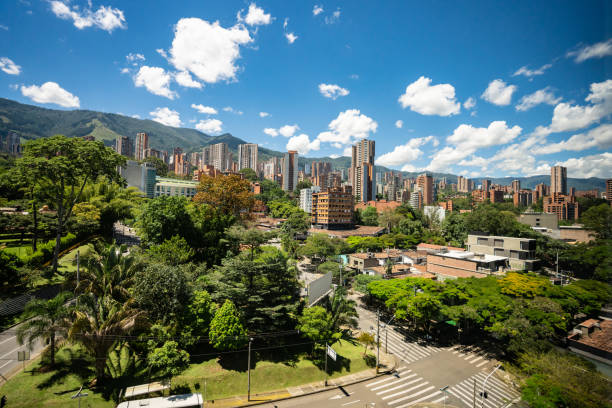
Medellín pairs spring-like weather with near-perfect US Eastern overlap. Consequently, it has become a magnet for developers who want live US hours and a low cost of living.
Colombia’s digital nomad visa is among the easiest to qualify for, with one of the lowest income thresholds anywhere. Budget roughly $1,200 to $2,000 a month.
- Pros: great US overlap; very affordable; strong, friendly nomad community.
- Cons: wifi varies by neighbourhood; learn the safe areas before you commit.
Buenos Aires, Argentina
Buenos Aires sits an hour or two ahead of US Eastern, which still leaves plenty of shared hours. In addition, Argentina scores well on internet quality, and a weak peso makes a dev salary go remarkably far.
Expect around $1,000 to $1,800 monthly, though prices swing with the currency.
- Pros: strong internet; cheap by Western standards; rich, walkable European-style city.
- Cons: economic volatility; carry US dollars and watch exchange rates.
Best cities for remote developers with European-timezone overlap
Meanwhile, answering to a team in London, Berlin, or Amsterdam? These cities keep you inside the EU workday, so your calendar stays sane while your rent does not bankrupt you.
Lisbon, Portugal

Naturally, Lisbon remains the default European base for a reason. It shares the UK and near-EU timezone, the infrastructure is excellent, and Portugal’s D8 visa offers a clear long-stay route.
That said, success has a price: Lisbon is no longer cheap, with monthly costs now closer to $2,200 to $3,200.
- Pros: perfect EU/UK overlap; superb wifi; established visa and nomad scene.
- Cons: rising rents; the city can feel saturated in peak season.
Also read: The Complete Digital Nomad Guide to Portugal
Tbilisi, Georgia

Meanwhile, Tbilisi is the budget hero of this list. Georgia asks for no minimum income on its nomad route, processes it fast and online, and charges no tax on foreign earnings.
At roughly $1,200 to $1,800 a month, it overlaps the European afternoon nicely while staying genuinely cheap.
- Pros: near-zero visa barrier; tax-friendly; very affordable; good EU overlap.
- Cons: smaller tech scene; limited live overlap with US teams.
Budapest, Hungary, and Cape Town, South Africa
Budapest gives you full Central European overlap, a stunning riverside city, and EU-level infrastructure at a fraction of Western prices.
Because the cost of living stays modest while the wifi stays excellent, it punches well above its weight for European-aligned developers.
Cape Town, meanwhile, sits two hours ahead of London, so it overlaps the EU day almost entirely while offering a spectacular coastline and a real startup scene.
Be warned, though: South Africa’s recurring power cuts mean a backup battery and a coworking space with a generator are non-negotiable there. Plan for that, and the lifestyle is hard to beat.
Best cities for remote developers on a tight budget
Starting or stretching a junior salary? Some of the best cities for remote developers are also the cheapest, provided you respect the timezone rule.
So Tbilisi and Medellín, both above, lead here. Chiang Mai in Thailand is the classic low-cost pick too, with a relaxed pace and monthly costs near $1,000 to $1,600. Just remember the catch below.
Best cities for async or Asia-Pacific developers
Now for the honest caveat. Southeast Asia is cheap, beautiful, and beloved by nomads, yet it punishes anyone on US or European hours.
Bangkok (around $1,200 to $2,200 monthly) and Bali’s Canggu (similar) are wonderful bases if your team is async-first or sits in Asia-Pacific.
Otherwise, the timezone gap means dawn calls and a slowly fraying reputation. So choose these only when your work genuinely does not need live overlap.
Comparison: the best cities for remote developers at a glance
| City | Timezone (UTC) | Best team overlap | Rough monthly cost | Nomad visa route? |
|---|---|---|---|---|
| Mexico City | −6 | US (Central) | $1,500–2,500 | Residency on income |
| Medellín | −5 | US (Eastern) | $1,200–2,000 | Yes, low threshold |
| Buenos Aires | −3 | US East / partial EU | $1,000–1,800 | Yes |
| Lisbon | 0/+1 | EU / UK | $2,200–3,200 | Yes (D8) |
| Tbilisi | +4 | EU afternoon | $1,200–1,800 | Yes, no income min |
| Budapest | +1/+2 | EU (Central) | $1,500–2,200 | Yes |
| Cape Town | +2 | EU | $1,500–2,500 | Yes |
| Chiang Mai | +7 | APAC / async | $1,000–1,600 | Yes (DTV) |
| Bali (Canggu) | +8 | APAC / async | $1,200–2,200 | Yes (remote-work) |
How do you choose your first base?
Feeling spoiled for choice? Narrow it down in four quick steps.
- Start with your team’s timezone. First, list the hours you must be online, then shortlist only cities that make those hours humane.
- Filter by visa eligibility. Next, match your income to a nomad-visa threshold, since a legal long stay beats visa-running every month.
- Pressure-test the wifi. Then check recent reports from other developers, not tourist reviews, because your livelihood rides on the connection.
- Commit short, then extend. Finally, book one month before you sign a year-long lease, so a city earns your stay rather than assuming it.
For a country-level view, see the best countries for remote developers, and for deep dives, browse our city guides.
What if you want to stay in the US?
Of course, not everyone wants a passport full of stamps, and that is fine.
If you would rather stay stateside, the usual winners are Austin, Denver, and Raleigh, which balance a real tech scene with costs well below the coastal hubs.
Still, the same rule applies: pick for your team and your wallet, not the marketing. For the global picture, though, the cities above give a developer salary far more room to breathe.
Common mistakes remote developers make when choosing a base
Even seasoned travellers trip over the same handful of errors. Avoid these four, and you skip months of painful lessons.
- Chasing the cheapest city. Because a rock-bottom cost looks great on paper, many developers ignore the timezone damage until their reviews start slipping.
- Trusting tourist wifi claims. A hotel that advertises “fast internet” rarely means fast enough for a video call plus a large deploy, so verify with other developers instead.
- Overstaying a tourist entry. Rather than risk fines or a ban, match your stay to a proper visa from day one.
- Signing a long lease too early. Even a perfect-on-paper city can disappoint in person, so test it for a month before you commit.
Dodge those four, and your shortlist of the best cities for remote developers turns into a base that actually lasts rather than one you flee after a fortnight.
Frequently asked questions
For US teams, Mexico City, Medellín, and Buenos Aires lead on timezone overlap.
For European teams, Lisbon, Tbilisi, Budapest, and Cape Town stand out. Ultimately, the right pick depends on whose hours you keep.
Timezone overlap with your team.
A great city becomes unworkable if every meeting falls in the middle of your night, so judge overlap before cost or lifestyle.
Tbilisi, Medellín, and Chiang Mai offer low monthly costs without poor connectivity.
Each lets a developer’s salary stretch a long way, provided the timezone suits your work.
For stays beyond a few months, usually yes.
Over 50 countries now offer nomad visas, with income requirements commonly between roughly €1,500 and €3,500 a month.
Georgia and Colombia have the lowest barriers.
Latin American cities win here. Mexico City, Medellín, and Buenos Aires all share or nearly share US working hours, so you collaborate live without sacrificing sleep.
Start here
So here is the whole guide in one line. Pick the city where your team’s hours feel normal, confirm the wifi and the visa, then let cost and lifestyle break the tie.
Do that, and the best cities for remote developers stop being a wishlist of postcards and become a shortlist of places you can genuinely build a career from.
And if you still need the role to fund the move, start with remote developer jobs and a portable remote developer setup.
Also Read:
A note on the data. Cost-of-living ranges are approximate monthly figures for a solo developer, compiled in June 2026 from widely used nomad cost trackers; they vary by lifestyle, neighbourhood, and exchange rates. Visa details were compiled in June 2026 from current nomad-visa guides, income thresholds, stay lengths, and tax rules change regularly, so always confirm the official requirements before you apply. Time zones shift with daylight saving. This article is general guidance, not legal, tax, or financial advice.
